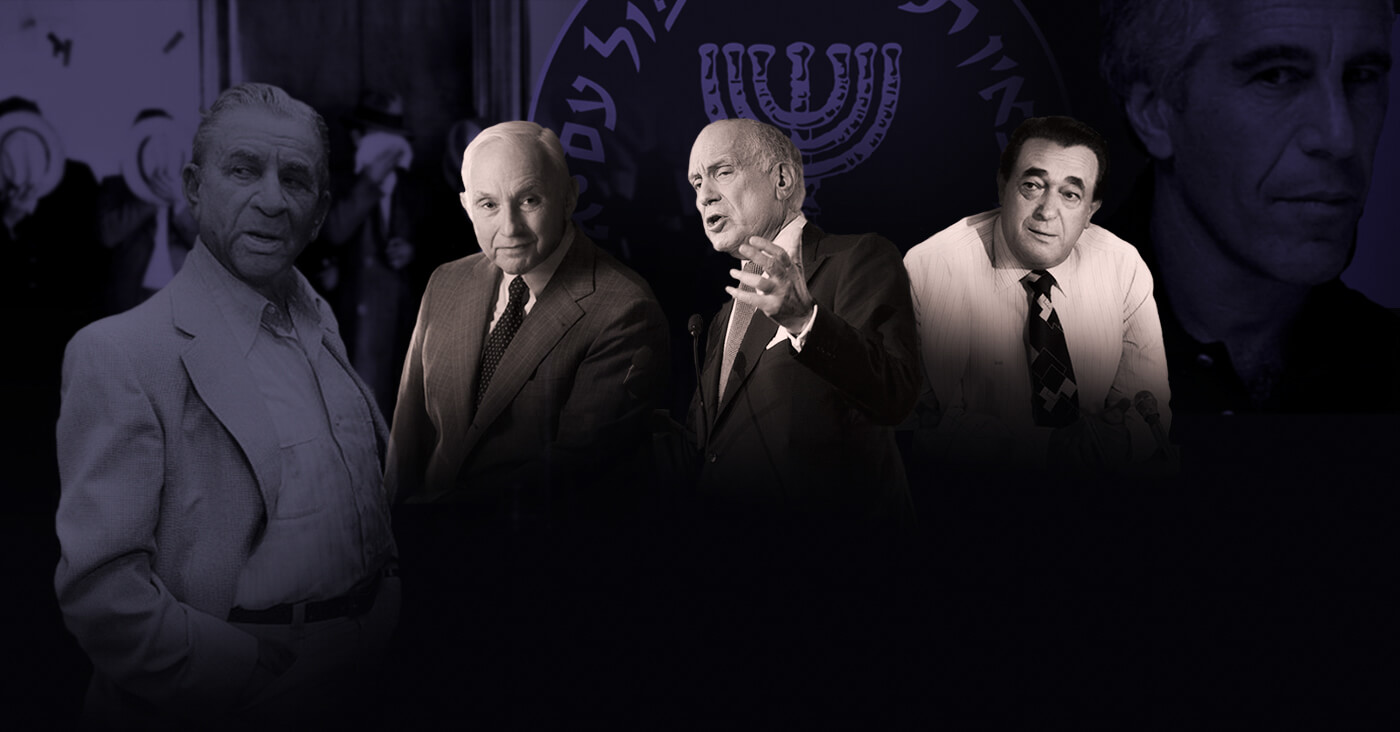
Mega Group, Maxwells and Mossad: The Spy Story at the Heart of the Jeffrey Epstein Scandal
The picture painted by the evidence is not a direct Epstein tie to a single intelligence agency
but a web linking key members of the Mega Group, politicians, and officials in both the U.S. and Israel,
and an organized-crime network with deep business and intelligence ties in both nations.
by Whitney Webb - August 07th, 2019
Source :
As billionaire
pedophile and alleged sex-trafficker, Jeffrey Epstein sits in prison, reports
have continued to surface about his reported links to intelligence, his
financial ties to several companies and “charitable” foundations, and his
friendships with the rich and powerful as well as top
politicians.
While Part I and Part II of
this series, “The Jeffrey Epstein Scandal: Too Big to Fail,” have focused on the
widespread nature of sexual blackmail operations in recent American history and
their ties to the heights of American political power and the U.S. intelligence
community, one key aspect of Epstein’s own sex-trafficking and blackmail
operation that warrants examination is Epstein’s ties to Israeli intelligence
and his ties to the “informal” pro-Israel philanthropist faction known as “the
Mega Group.”
The Mega Group’s role in the Epstein case has
garnered some attention, as Epstein’s main financial patron for decades,
billionaire Leslie Wexner, was a co-founder of the group that unites several
well-known businessmen with a penchant for pro-Israel and ethno-philanthropy
(i.e., philanthropy benefiting a single ethnic or ethno-religious group).
However, as this report will show, another uniting factor among Mega Group
members is deep ties to organized crime, specifically the organized crime
network discussed in Part I of this series, which was largely led by notorious American mobster Meyer Lansky.
By virtue of the role of many Mega Group members as major political donors in both the U.S. and Israel, several of its
most notable members have close ties to the governments of both countries as
well as their intelligence communities. As this report and a subsequent report
will show, the Mega Group also had close ties to two businessmen who worked for
Israel’s Mossad — Robert Maxwell and Marc Rich — as well as to top Israeli
politicians, including past and present prime ministers with deep ties to
Israel’s intelligence community.
One of those businessmen working for the
Mossad, Robert Maxwell, will be discussed at length in this report. Maxwell, who
was a business partner of Mega Group co-founder Charles Bronfman, aided the
successful Mossad plot to plant a trapdoor in U.S.-created software that was
then sold to governments and companies throughout the world. That plot’s success
was largely due to the role of a close associate of then-President Ronald Reagan
and an American politician close to Maxwell, who later helped aid Reagan in the
cover-up of the Iran Contra scandal.
Years later, Maxwell’s daughter — Ghislaine
Maxwell — would join Jeffrey Epstein’s “inner circle” at the same time Epstein
was bankrolling a similar software program now being marketed for critical
electronic infrastructure in the U.S. and abroad. That company has deep and
troubling connections to Israeli military intelligence, associates of the Trump
administration, and the Mega Group.
Epstein appears to have ties to Israeli
intelligence and has well-documented ties to influential Israeli politicians and
the Mega Group. Yet, those entities are not isolated in and of themselves, as
many also connect to the organized crime network and powerful alleged pedophiles
discussed in previous installments of this series.
Perhaps the best illustration of how the
connections between many of these players often meld together can be seen in
Ronald Lauder: a Mega Group member, former member of the Reagan administration,
long-time donor to Israeli Prime Minister Benjamin Netanyahu and Israel’s Likud
Party, as well as a long-time friend of Donald Trump and Roy Cohn.
From cosmetics heir to political player
One often overlooked yet famous client and
friend of Roy Cohn is the billionaire heir to the Estee Lauder cosmetics
fortune, Ronald Lauder. Lauder is often described in the press as a “leading
Jewish philanthropist” and is the president of the World Jewish Congress, yet
his many media profiles tend to leave out his highly political
past.
In a statement given by Lauder to New York Times reporter Maggie Haberman in 2018, the cosmetics heir
noted that he has known Trump for over 50 years, going back at least to the
early 1970s. According to Lauder, his relationship with Trump began when Trump
was a student at the Wharton School at the University of Pennsylvania, which
Lauder also attended.
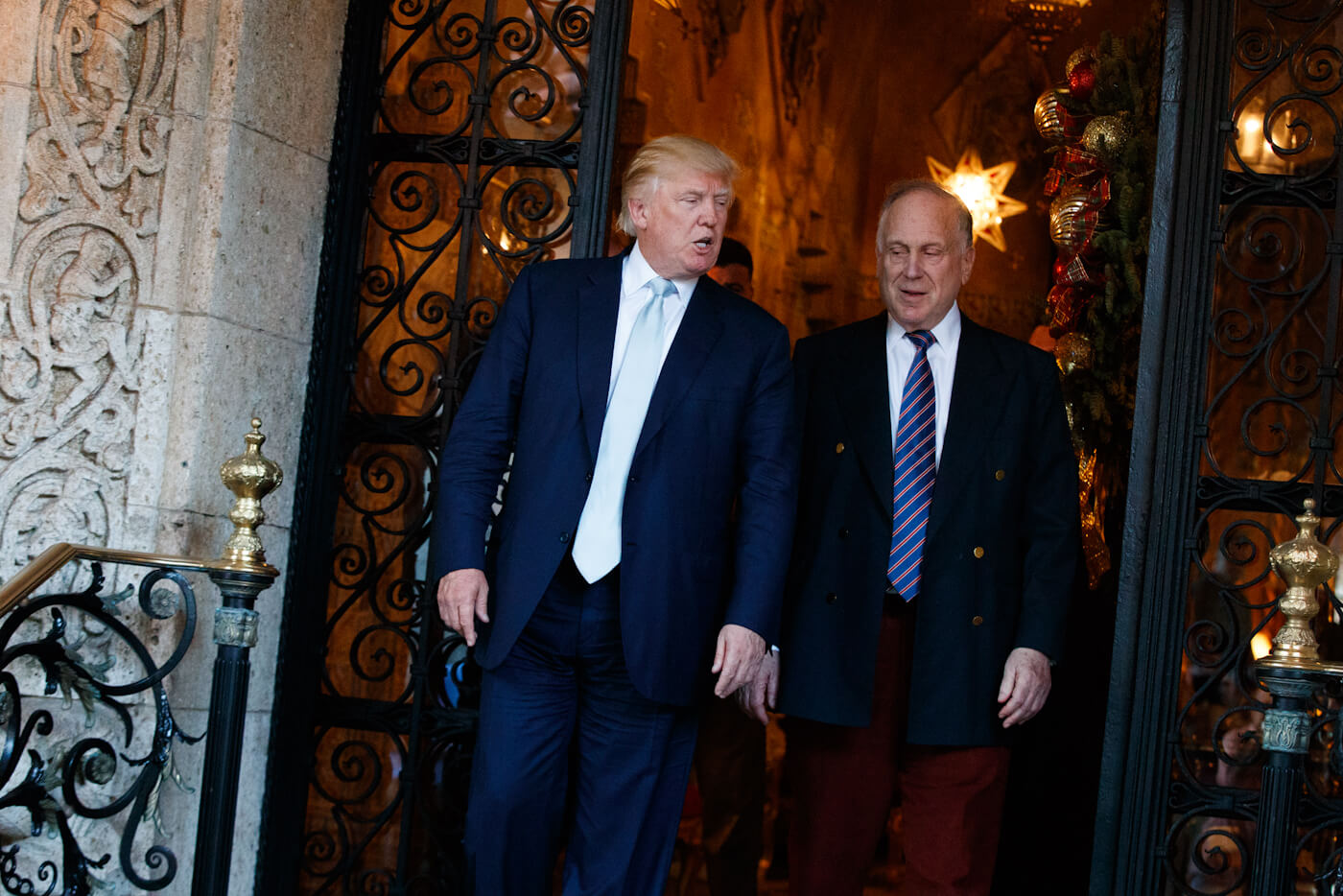
President-elect Trump walks with Ronald Lauder after meeting at Mar-a-Lago, Dec. 28, 2016, in Palm
Beach, Fla. Evan Vucci | AP
Though the exact nature of their early
friendship is unclear, it is evident that they shared many of the same
connections, including to the man who would later count them both as his
clients, Roy Cohn. While much has been said of the ties between Cohn and Trump,
Cohn was particularly close to Lauder’s mother, Estee Lauder (born Josephine
Mentzer). Estee was even counted among Cohn’s most high-profile friends in his New York Times obituary.
A small window into the Lauder-Cohn relationship surfaced briefly in a 2016 article in Politico
about a 1981 dinner party held at Cohn’s weekend home in Greenwich, Connecticut.
The party was attended by Ronald Lauder’s parents, Estee and Joe, as well as
Trump and his then-wife Ivana, who had a weekend home just two miles away. That party was held soon after Cohn had helped Reagan
secure the presidency and had reached the height of his political influence. At
the party, Cohn offered toasts to Reagan and to then-Senator for New York
Alfonse D’Amato, who would later urge Ronald Lauder to run for political office.
Two years later, in 1983, Ronald Lauder — whose only professional experience at that point was working for his parent’s
cosmetics company — was appointed to serve as United States Deputy Assistant Secretary of Defense for European and NATO Affairs.
Soon after his appointment, he served on the Dinner Tribute Committee for a dinner hosted by the Jewish fraternal and
strongly pro-Israel organization B’nai B’rith, the parent organization of the
controversial Anti-Defamation League (ADL), in Roy Cohn’s honor. Cohn’s influential father, Albert Cohn, was
the long-time president of B’nai B’rith’s powerful New England-New York chapter and Roy Cohn himself was
a member of B’nai B’rith’s Banking and Finance Lodge.
The dinner specifically sought to honor Cohn for his pro-Israel advocacy and his efforts to “fortify” Israel’s
economy, and its honorary chairmen included media mogul Rupert Murdoch, Donald
Trump and then-head of Bear Stearns Alan Greenberg, all of whom are connected to Jeffrey Epstein.
During his time as deputy assistant secretary of defense, Lauder was also very active in Israeli politics and had already
become an ally of the then-Israeli representative to the United Nations and
future prime minister of Israel, Benjamin Netanyahu. Lauder would go on to be
one of the most important individuals in Netanyahu’s rise to power, particularly
during his upset victory in 1996, and a major financier of Israel’s right-wing Likud Party.
In 1986, the year that Roy Cohn died, Lauder left his post at the Pentagon and became the U.S. ambassador to Austria, where
his tenure was shaped by his confrontations with the then-Austrian president and former Nazi collaborator, Kurt Waldheim.
Lauder’s interest in Austrian politics has continued well into recent years, culminating in accusations that he
sought to manipulate Austrian elections in 2012.
After leaving his ambassadorship, Lauder founded the Ronald S. Lauder Foundation in 1987 and later went on to run for Mayor of New
York against Rudy Giuliani in 1989. Lauder was encouraged to run by then-Senator Alfonse D’Amato, who had close ties to Roy Cohn and his
long-time law partner Tom Bolan, who was D’Amato’s adviser .
At the aforementioned 1983 B’nai B’rith dinner honoring Cohn, D’Amato was the
featured speaker.
The likely reason was that Giuliani, though once an ally of the “Roy Cohn machine,” was at the time deeply disliked
by the late Cohn’s associates for prosecuting Cohn’s former law partner, Stanley
Friedman, for racketeering, conspiracy and other charges. Giuliani also had a
history of bitter disagreements with D’Amato. Lauder’s primary campaign, though
unsuccessful, was noted for its viciousness and its cost, as it burned through more than $13 million.
A few years later, in the early 1990s, Lauder would join a newly formed group that has long evaded scrutiny from the media but
has recently become of interest in connection with the Jeffrey Epstein scandal:
the Mega Group.
Lauder, Epstein and the mysterious Austrian passport
Before getting to the Mega Group, it is worth noting one particular act apparently undertaken by Lauder while he was U.S. ambassador to Austria that has recently come to light in relation to the arrest in early July of Jeffrey Epstein, a finding first reported by journalist Edward Szall. When police recently discovered an Austrian passport with Epstein’s picture and a fake name after raiding his Manhattan residence, the source and purpose of the passport came under media scrutiny.
According to Associated Press, Epstein’s defense lawyers specifically argued that “a friend gave it to him [Epstein] in
the 1980s after some Jewish-Americans were informally advised to carry
identification bearing a non-Jewish name when traveling internationally during a
period when hijackings were more common.” This claim appears to be related to
concerns that followed the hijacking of Air France Flight 139 in 1976 when Israeli and Jewish hostages were
separated from other hostages based largely on the passports in their
possession.
Given that Epstein was unable to meet the conventional qualifications for an Austrian passport — including long-term
residency in Austria (the passport lists him as a resident of Saudi Arabia) and
fluency in German — it appears that the only way to have acquired an Austrian
passport was by unconventional means, meaning assistance from a well-connected Austrian official or foreign
diplomat with clout in Austria.
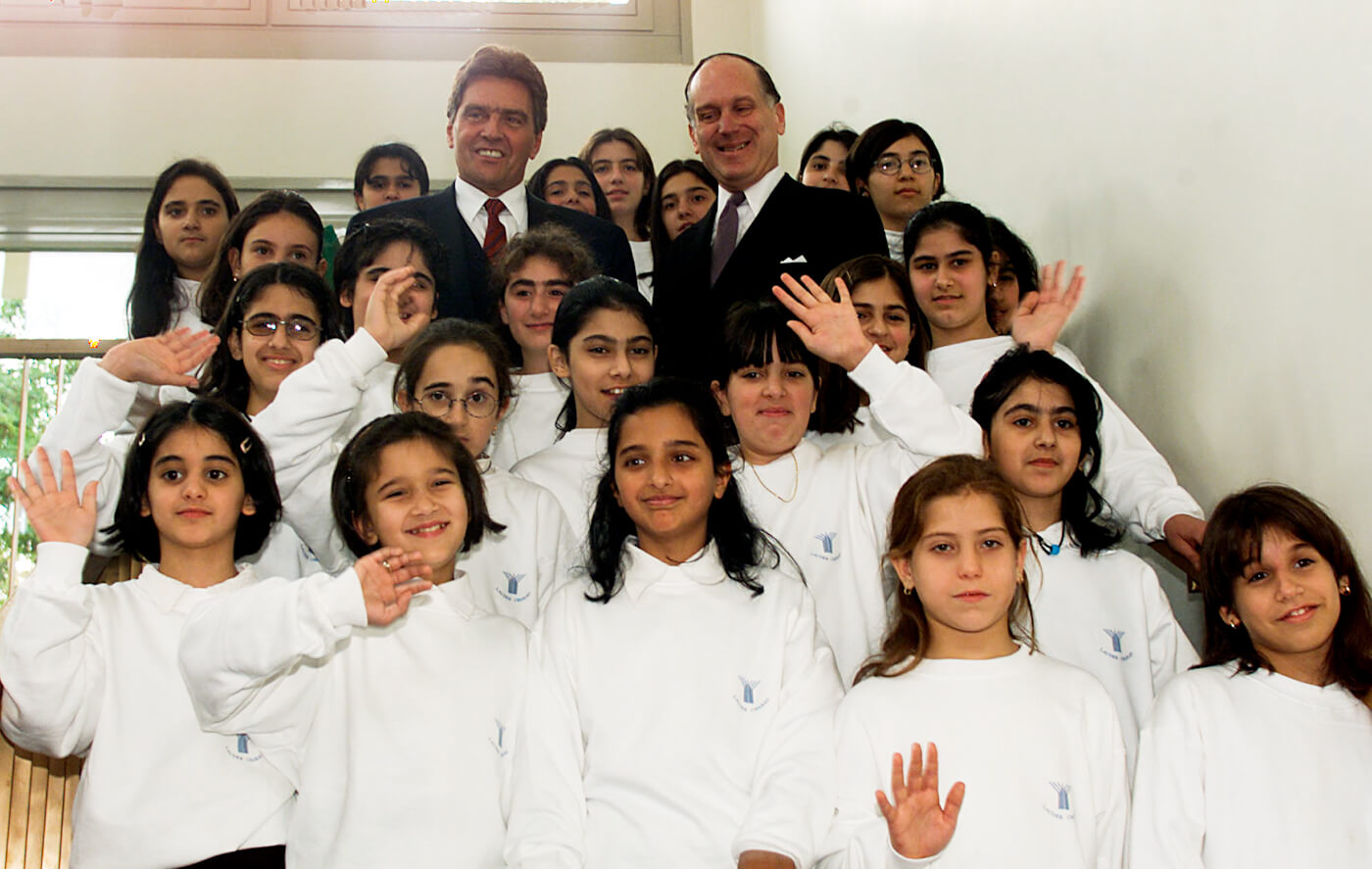
Ronald Lauder, right,
and Austrian Chancellor Viktor Klima pose with students from the Lauder Chabad
School in Vienna, Austria in 1999. Martin Gnedt | AP
Lauder, then-ambassador to Austria for the Reagan administration, would have been well-positioned to acquire such a
passport, particularly for the reason cited by Epstein’s attorneys that
Jewish-Americans could be targeted during travel, and in light of Lauder’s very
public concerns over threats Jews face from certain terror groups. Furthermore,
the passport had been issued in 1987, when Lauder was still serving as an
ambassador.
In addition, Lauder was well-connected to Epstein’s former patron — former head of Bear Stearns Alan Greenberg,
who had hired Epstein in the late 1970s immediately after the latter was fired from the Dalton School — and Donald Trump,
another friend of Lauder and Greenberg who began his friendship with Epstein in 1987, the same
year the fake Austrian passport was issued. In 1987, Epstein also began his
relationship with his principal financier, Leslie Wexner, who is also closely
associated with Lauder (though some sources claim that Epstein and Wexner first
met in 1985 but that their strong business relationship was not established
until 1987).
Though Epstein’s defense attorney declined to
reveal the identity of the “friend” who provided him with the fake Austrian
passport, Lauder was both well-positioned to acquire it in Austria and also
deeply connected to the Mega Group, which was co-founded by Epstein’s patron
Leslie Wexner and to which Epstein has many connections. These connections to
both the Austrian government and to Epstein’s mentor make Lauder the most likely
person to have acquired the document on Epstein’s behalf.
Furthermore, Epstein and the Mega Group’s ties to the Israeli intelligence agency, Mossad, also suggest Lauder was
involved in procuring the passport, in light of his close ties to the Israeli government and the fact that Mossad
has a history of using ambassadors abroad to procure false, foreign passports for its
operatives.
Lauder himself has been alleged to have ties to Mossad, as he is a long-time funder of IDC Herzliya, an Israeli university
closely associated with Mossad and their recruiters as well as Israeli military intelligence. Lauder
even founded IDC Herzliya’s Lauder School of Government, Diplomacy and Strategy.
Furthermore, Lauder co-founded the Eastern European broadcasting network CETV with Mark Palmer, a former U.S. diplomat,
Kissinger aide and Reagan speechwriter. Palmer is better known for co-founding
the National Endowment for Democracy (NED), an organization often described as
an accessory to U.S. intelligence, and one whose first president confessed to
the Washington Post that “a lot of what we do today was done covertly 25 years ago by the CIA.” A
2001 report in the Evening Standard noted that Epstein once claimed
that during the 1980s he worked for the CIA, but Epstein later backed away from that assertion.
The origins of the Mega Group Mafia
The Mega Group — a secretive group of billionaires to which Lauder belongs — was formed in 1991 by Charles Bronfman
and Leslie Wexner, the latter of whom has received considerable media scrutiny
following the July arrest of his former protege Jeffrey Epstein. Media
profiles of the group paint it as “a loosely organized club of 20 of the nation’s wealthiest and most influential
Jewish businessmen” focused on “philanthropy and Jewishness,” with membership
dues upwards of $30,000 per year. Yet several of its most prominent members have
ties to organized crime.
Mega Group members founded and/or are closely
associated with some of the most well-known pro-Israel organizations. For
instance, members Charles Bronfman and Michael Steinhardt formed Birthright Taglit with the backing of then- and
current Prime Minister Benjamin Netanyahu. Steinhardt, an atheist, has stated
that his motivation in helping to found the group was to advance his
own belief that devotion to and faith in the state of Israel should serve as “a substitute for [Jewish]
theology.”
Other well-known groups associated with the
Mega Group include the World Jewish Congress — whose past president, Edgar
Bronfman, and current president, Ronald Lauder, are both Mega Group members —
and B’nai B’rith, particularly its spin-off known as the Anti-Defamation League
(ADL). The Bronfman brothers were major donors to the ADL, with Edgar Bronfman
serving as the ADL’s honorary national vice-chair for several years.

Former Israeli president Shimon Peres, second from left, listens to Edgar Bronfman during a
1995 lunch thrown in Peres’ honor. From left are: Laurence Tisch, Chairman,
President and Chief executive officer of CBS; Israeli Ambassador to the United
States. Itamar Rabinowitz and Bronfman. David Karp | AP
When Edgar Bronfman died in 2013, long-time ADL Director Abe Foxman said,
“Edgar was for many years Chair of our Liquor Industry Division, Chair of our
New York Appeal, and one of our most significant benefactors.” Other Mega Group
members that are donors and major supporters of the ADL include Ronald Lauder, Michael Steinhardt
and the late Max Fisher. As previously mentioned, Roy Cohn’s father was a long-time leader of B’nai
B’rith’s influential New England-New York chapter and Cohn was later a celebrated member of its banking and finance lodge.
In addition, Mega Group members have also been key players in the pro-Israel lobby in the United States. For instance, Max
Fisher of the Mega Group founded the National Jewish Coalition, now known as the Republican Jewish Coalition — the main
pro-Israel neoconservative political lobbying group, known for its support of
hawkish policies, and whose current chief patrons, Sheldon Adelson and Bernard
Marcus, are among Donald Trump’s top donors.
Though the Mega Group has officially existed only since 1991, the use of “philanthropy” to provide cover for more
unscrupulous lobbying or business activities was pioneered decades earlier by
Sam Bronfman, the father of Mega Group members Edgar and Charles Bronfman. While
other North American elites like J.D. Rockefeller had previously used
philanthropic giving as a means of laundering their reputations, Bronfman’s
approach to philanthropy was unique because it was focused on giving
specifically to other members of his own ethno-religious background.
Sam Bronfman, as was detailed in Part I of this series, had long-standing deep ties to organized crime, specifically Meyer
Lanksy’s organized crime syndicate. Yet, Bronfman’s private ambition, according
to those close to him, was to become a respected member of high society. As a
consequence, Bronfman worked hard to remove the stain that his mob associations
had left on his public reputation in Canada and abroad. He accomplished this by
becoming a leader in Canada’s Zionist movement and, by the end of the 1930s, he
was head of the Canadian Jewish Congress and had begun to make a name for himself as a
philanthropist for Jewish causes.
Yet even some of Bronfman’s activism and philanthropy had hints of the mobster-like reputation he tried so hard to shake.
For instance, Bronfman was actively involved in the illegal shipping of arms to
Zionist paramilitaries in Palestine prior to 1948, specifically as a co-founder
of the National Conference for Israeli and Jewish Rehabilitation that smuggled weapons
to the paramilitary group Haganah.
At the same time Bronfman was abetting the illegal smuggling of weapons to the Haganah, his associates in the criminal
underworld were doing the same. After World War II, close aides of David
Ben-Gurion, who would later become the first prime minister of Israel and was
instrumental in the founding of Mossad, forged tight-knit relationships
with Meyer Lansky, Benjamin “Bugsy” Siegel, Mickey Cohen and other Jewish
gangsters of the period. They used their clandestine networks to establish a
vast arms smuggling network between the United States and Zionist settlements in
Palestine, arming both the Haganah and the Irgun paramilitary groups. As noted
in Part I of this report, at the same time these gangsters were aiding the
illegal arming of Zionsit paramilitaries, they were strengthening their ties to
U.S. intelligence that had first been formally (though covertly) established in
World War II.
After Israel was founded, Sam Bronfman worked with future Israeli Prime Minister
Shimon Peres to negotiate the sale of Canadian armaments at half-price to Israel
and the bargain weapons purchase was paid for entirely by a fundraising dinner
hosted by Bronfman and his wife. Many years later, Peres would go on to introduce
another future prime minister of Israel, Ehud Barak, to Jeffrey Epstein.
The rest of the Bronfman family’s march on “the road to respectability” was undertaken by Bronfman’s children, who married
into aristocratic families such as the European Rothschilds and the Wall Street “royalty” of
the Lehmans and the Loebs
The Bronfmans’ newfound respectability did not mean that their association with the Lansky-led criminal empire had
dissolved. Indeed, prominent members of the Seagrams dynasty came under fire in
the 1960s and 1970s for their close association with Willie “Obie” Obront, a major figure in Canadian organized crime, whom
Canadian professor Stephen Schneider has referred to as the Meyer Lansky of Canada.
However, Edgar and Charles Bronfman were hardly the only members of the Mega Group with deep and long-standing ties to
the Lansky-led National Crime Syndicate. Indeed, one of the group’s prominent
members, hedge fund manager Michael Steinhardt, opened up about his own family
ties to Lansky in his autobiography No Bull: My Life in and out the Markets ,
where he noted that his father, Sol “Red McGee” Steinhardt, was Lansky’s jewel fence of choice
and a major player in New York’s criminal underworld. Sol Steinhardt was also his son’s first
client on Wall Street and helped him jumpstart his career in finance.
The ties between the Mega Group and the National Crime Syndicate don’t stop there. Another prominent member of the Mega
Group with ties to this same criminal network is Max Fisher, who has been described as Wexner’s mentor and is also alleged
to have worked with Detroit’s “Purple Gang” during Prohibition and beyond. The Purple Gang were
part of the network that smuggled Bronfman liquor from Canada into the United
State during Prohibition, and one of its founders, Abe Bernstein, was a close associate
of both Meyer Lansky and Moe Dalitz. Fisher was a key adviser to several U.S. presidents, beginning with Dwight D. Eisenhower, as well as to
Henry Kissinger.

Max Fisher, center, and Henry Kissinger, right, meet with leaders of Jewish organizations prior to
Kissinger’s 1975 Middle East trip. Henry Burroughs | AP
In addition to Fisher, Mega Group member Ronald Lauder was connected to Roy Cohn and Tom Bolan, both of whom were closely
associated with this same Lansky-led crime network (see Part I and Part II )
and who regularly represented top Mafia figures in court. Furthermore, another
member of the Mega Group, director Steven Spielberg, is a well-known protege
of Lew Wasserman, the mob-connected media mogul and long-time backer of Ronald
Reagan’s film and later political career, discussed in Part II of
this series.
One surprise connection to Cohn involves Mega Group member, and former president of U.S. weapons firm General Dynamics, Lester
Crown, whose brother-in-law is David Schine, Cohn’s confidant and alleged lover during the McCarthy hearings,
whose relationship with Cohn helped bring about the downfall of McCarthyism.
Another member of the Mega Group worth noting is Laurence Tisch, who owned CBS News for several years and founded
Loews Corporation. Tisch is notable for his work for the Office of Strategic Services (OSS), the precursor to the CIA, where Donald
Barr, who hired Epstein at the Dalton School, also served and which forged ties
with Lansky’s criminal empire during World War II.
Wexner’s mansions and the Shapiro murder
Leslie “Les” Wexner, the other Mega Group co-founder, also has ties to organized crime. Wexner’s ties to Jeffrey Epstein
have come under scrutiny following the latter’s recent arrest, as Wexner was the
only publicly acknowledged client of Epstein’s suspicious hedge fund, the source
of much of this wealth, and the previous owner of Epstein’s $56 million Manhattan townhouse, which Wexner transferred to an
Epstein-controlled entity for free.
Before Epstein received the townhouse, Wexner appears to have used the residence for some unconventional purposes, noted in
a 1996 New York Times article on the then-Wexner-owned residence, which included “a bathroom reminiscent of James Bond movies:
hidden beneath a stairway, lined with lead to provide shelter from attack and supplied with closed-circuit television
screens and a telephone, both concealed in a cabinet beneath the sink.” The Times
article does not speculate as to the purpose of this equipment, though the
allusion to famous fictional superspy James Bond suggests that it may have been
used to snoop on guests or conduct electronic surveillance.
The 1996Times article also noted that, after Wexner bought the
residence for $13.2 million in 1989, he spent millions more decorating and
furnishing the home, including the addition of the electronic equipment in the
“James Bond” bathroom, only to apparently never live in it. The Times,
which interviewed Epstein for the piece, quoted him as saying that “Les never
spent more than two months there.” Epstein told the Times, which identified Epstein as Wexner’s “protege and
one of his financial advisers,” that the house, by that time, already belonged to him.
That same year, Epstein was commissioning artwork for Wexner’s Ohio mansion. A recent article from the Times noted that:
In the summer of 1996, Maria Farmer was working on an art project for Mr. Epstein in Mr. Wexner’s Ohio mansion. While she was there, Mr. Epstein sexually assaulted her, according to an affidavit Ms. Farmer filed earlier this year in federal court in Manhattan. She said that she fled the room and called the police, but that Mr. Wexner’s security staff refused to let her leave for 12 hours.”
Farmer’s account strongly suggests that, given the behavior of his personal security staff at his mansion following Epstein’s alleged assault on Farmer, Wexner was well aware of Epstein’s predatory behavior towards young women. This is compounded by claims made by Alan Dershowitz — a former lawyer for and friend of Epstein’s, who has also been accused of raping underage girls — that Wexner has also been accused of raping underage girls exploited by Epstein on at least seven occasions.
The presence of the electronic equipment in his home’s bathroom, other oddities related to the townhouse, and aspects of the links between Epstein and Wexner suggest there is more to Wexner, who has rather successfully developed a public image of a respectable businessman and philanthropist, much like other prominent members of the Mega Group.
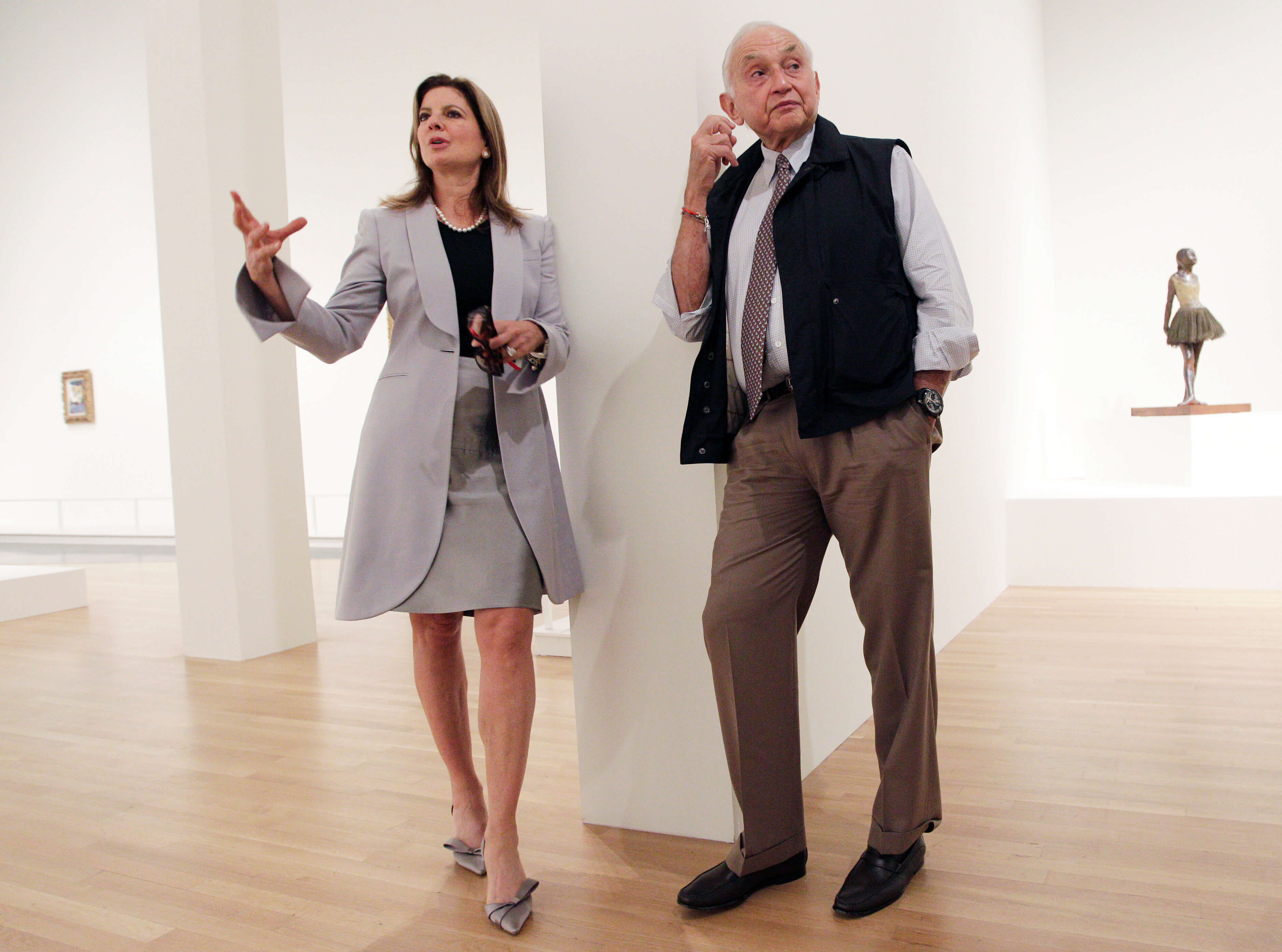
Leslie Wexner and his wife Abigail tour the “Transfigurations” exhibit at the Wexner Center for the
Arts. Jay LaPrete | AP
However, bits and pieces of Wexner’s private secrets have occasionally bubbled up, only to be subjected to rapid cover-ups
amidst concerns of “libeling” the powerful and well-connected billionaire “philanthropist.”
In 1985, Columbus (Ohio) lawyer Arthur Shapiro was murdered in broad daylight at
point-blank range in what was largely referred to as a “mob style murder.” The
homicide still remains unsolved, likely due to the fact that then-Columbus
Police Chief James Jackson ordered the destruction of key documents of his
department’s investigation into the murder.
Jackson’s ordering of the documents’ destruction came to light years later in 1996, when he was under investigation
for corruption. According to Columbus Dispatch , Jackson justified the destruction of one “ viable
and valuable ” report because he felt that it “was so filled with wild speculation about prominent business leaders
that it was potentially libelous.” The nature of this “wild speculation” was
that “millionaire businessmen in Columbus and Youngstown were linked to the
‘mob-style murder.’”
Though Jackson’s efforts were meant to keep this “libelous” report far from public view, it was eventually obtained
by Bob Fitrakis — attorney, journalist, and executive director of the Columbus Institute for Contemporary
Journalism — after he was “accidentally” sent a copy of the report in 1998 as part of a public records request.
The report, titled “Shapiro Homicide Investigation: Analysis and Hypothesis,”
names Leslie Wexner as linked “with associates reputed to be organized crime
figures” and also lists the names of businessman Jack Kessler, former Columbus
City Council President and Wexner associate Jerry Hammond, and former Columbus
City Council member Les Wright as also being involved in Shapiro’s murder.
The report also noted that Arthur Shapiro’s law firm — Schwartz, Shapiro, Kelm & Warren — represented Wexner’s company,
The Limited, and states that “prior to his death, Arthur Shapiro managed this
account [The Limited] for the law firm.” It also noted that, at the time of his
death, Shapiro “was the subject of an investigation by the Internal Revenue
Service because he had failed to file income tax returns for some seven years
prior to his death, and he had invested in some questionable tax shelters.” It
also stated that his death prevented Shapiro from his planned testimony at a
grand jury hearing about these “questionable tax shelters.”
As to Wexner’s alleged links to organized crime, the report focuses on the close business relationship between Wexner’s
The Limited and Francis Walsh, whose trucking company “[had] done an excess of
90 percent of the Limited’s trucking business around the time of Shapiro’s
murder,” according to the report. Walsh was named in a 1988 indictment
as a “co-conspirator” of Genovese crime family boss Anthony “Fat Tony” Salerno,
whose long-time lawyer was Roy Cohn; and the Shapiro murder report stated that
Walsh was “still considered associates of the Genovese/LaRocca crime family, and
Walsh was still providing truck transportation for The Limited.”
Notably, the Genovese crime family has long formed a key part of the National Crime Syndicate, as its former head, Charles
“Lucky” Luciano, co-created the criminal organization with his close friend Meyer
Lansky. Upon Luciano’s imprisonment and subsequent deportation from the United
States, Lansky took over the syndicate’s U.S. operations and his association
with Luciano’s successors continued until Lansky’s death in 1983.
The “Mega” Mystery and the Mossad
In May 1997, the Washington Post broke an explosive story — long since forgotten — based on an intercepted phone call made between a
Mossad official in the U.S. and his superior in Tel Aviv that discussed the Mossad’s efforts to obtain a secret U.S. government document.
According to the Post, the Mossad official stated during the phone call that “Israeli Ambassador Eliahu Ben
Elissar had asked him whether he could obtain a copy of the letter given to [Palestinian leader Yasser] Arafat by [then-Secretary of State Warren]
Christopher on Jan. 16, the day after the Hebron accord was signed by Arafat and Israeli Prime Minister Binyamin Netanyahu.”
The Post article continued:
According to a source who viewed a copy of the NSA transcript of the conversation, the intelligence officer, speaking in Hebrew, said, ‘The ambassador wants me to go to Mega to get a copy of this letter.’ The source said the supervisor in Tel Aviv rejected the request, saying, ‘This is not something we use Mega for.’”
The leaked communication led to an investigation that sought to identify an individual code-named “Mega” that the
Post said “may be someone in the U.S. government who has provided information to the
Israelis in the past,” a concern that subsequently spawned a fruitless FBI investigation. The Mossad later claimed
that “Mega” was merely a codeword for the U.S.’ CIA, but the FBI and NSA were unconvinced by that claim and
believed that it was a senior U.S. government official that had potentially once been
involved in working with Jonathan Pollard, the former U.S. naval intelligence
analyst later convicted of spying for the Mossad.
Almost one year to the day after the “Mega” spy scandal broke, the Wall Street
Journal was the first outlet to report on the existence of a little-known organization of billionaires that was “informally”
called the Mega Group and had been founded years prior in 1991. The report made
no mention of the spy scandal that had spread concerns of Israeli espionage in
the U.S. only a year prior. However, the group’s distinctive “informal” name and
the connections of its members to the Mossad and to high-ranking Israeli
politicians, including prime ministers, raise the possibility that “Mega” was
not an individual, as the FBI and NSA had believed, but a group.
In 1997, when the “Mega” spy scandal broke, Netanyahu had recently become prime minister of Israel after an upset victory, a
victory that was largely credited to one well-connected Netanyahu backer in particular, Ronald Lauder. Beyond
being a major donor, Lauder had brought Arthur Finklestein on to work for
Netanyahu’s 1996 campaign, whose strategies were credited for Netanyahu’s
surprise win. Netanyahu was close enough to Lauder that he personally enlisted
Lauder and George Nader to serve as his peace envoys to Syria.
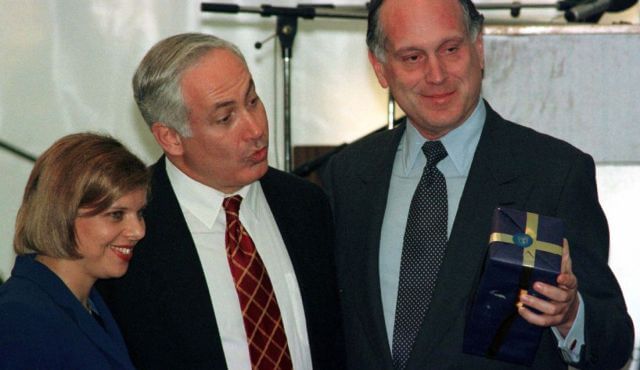
Benjamin Netanyahu and his wife Sara with Ronald Lauder in 1997. Photo | Reuters
Nader, who was connected to the Trump 2016 campaign and Trump ally and Blackwater founder Erik Prince, was
recently hit with federal child sex trafficking charges last
month, soon after Jeffrey Epstein had been arrested on similar charges. At the
time Nader was picked to work with Lauder on Netanyahu’s behalf, he had already been caught
possessing large amounts of child pornography on two separate occasions, first
in 1984 and later in 1990.
This strong connection between Netanyahu and Lauder during the time of the 1997 “Mega” spy scandal is important considering
Mossad answers directly to Israel’s prime minister.
Another possible connection between the Mega Group and the Mossad owes to the Mega Group’s ties to Meyer Lansky’s criminal
network. As was detailed in Part I, Lansky had established deep ties to U.S.
intelligence after World War II and was also connected to the Mossad through
Mossad official Tibor Rosenbaum, whose bank was frequently used by Lansky to
launder money. In addition, Lansky collaborated on at least one occasion with
notorious Mossad “superspy” Rafi Eitan, who he helped acquire
sensitive electronic equipment possessed only by the CIA but coveted by Israeli
intelligence. Eitan is best known in the U.S. for being the Mossad handler of
Jonathan Pollard.
Notably, Eitan was the main source of claims that the code-word “Mega” used by the Mossad officials in 1997
referred to the CIA and not to a potential source in the U.S. government once
linked to Pollard’s spying activities, making his claims as to the true meaning
of the term somewhat dubious.
Given that the organized crime network tied to the Mega Group had ties to both U.S. and Israeli intelligence, the “Mega”
codeword could plausibly have referred to this secretive group of billionaires.
More supporting evidence for this theory comes from the fact that prominent
members of the Mega Group were business partners of Mossad agents, including
media mogul Robert Maxwell and commodities trader Marc Rich.
The mysterious Maxwells
The Maxwell family has become a source of
renewed media interest following Jeffrey Epstein’s arrest, as Ghislaine Maxwell,
long described in the media as a British “socialite,” was publicly cited as
Epstein’s long-time “on and off” girlfriend, and Epstein’s victims, as well as
former wives of Epstein’s friends, have claimed that she was Epstein’s “pimp”
and procured underage girls for his sexual blackmail operation. Ghislaine
Maxwell is also alleged to have engaged in the rape of the girls she procured
for Epstein and to have used them to produce child pornography.
Ghislaine was the favorite and youngest daughter of media mogul Robert Maxwell. Maxwell, born Jan Ludvick Hoch, had
joined the British Army in World War II. Afterwards, according to authors John Loftus and Mark Aarons,
he greatly influenced the Czechoslovakian government’s decision to arm Zionist
paramilitaries during the 1948 war that resulted in Israel’s creation as a
state, and Maxwell himself was also involved in the smuggling of aircraft parts
to Israel.
Around this time, Maxwell was approached by British intelligence outfit MI6 and offered a position that Maxwell ultimately
declined. MI6 then classified him as “Zionist — loyal only to Israel” and made him a person of interest. He
later became an agent of the Mossad, according to several books including Robert Maxwell: Israel’s Superspy by Gordon Thomas and
Martin Dillon. Furthermore, Seymour Hersh’s The Samson Option: Israel’s Nuclear Arsenal and
American Foreign Policy alleges ties between Maxwell and Israeli intelligence.
According to Victor Ostrovsky, a former Mossad case officer:
Mossad was financing many of its operations in Europe from money stolen from Maxwell’s newspaper pension fund. They got their hands on the funds almost as soon as Maxwell made the purchase of the Mirror Newspaper Group with money lent to him by Mossad.”
In exchange for his services, the Mossad helped Maxwell satisfy his sexual appetite during his visits to Israel,
providing him with prostitutes, “the service maintained for blackmail purposes.” It was later
revealed that the hotel in which he stayed in Israel was bugged with cameras,
allowing the Mossad to acquire “a small library of video footage of Maxwell in
sexually compromising positions.” As with the CIA, the Mossad’s use of blackmail
against both friend and foe is well-documented and known to be extensive.
Maxwell was also a close associate and friend of Israeli “superspy” Rafi Eitan, who, as previously mentioned, was Jonathan
Pollard’s handler and who had previously worked directly with Meyer Lansky.
Eitan had learned of a revolutionary new software being used by the U.S. government known as
“Promis” from Earl Brian, a long-time associate and aide to Ronald Reagan.
Promis is often considered the forerunner to the “Prism” software used by spy
agencies today and was developed by William Hamilton, who leased the software to
the U.S. government through his company, Inslaw, in 1982.

Ariel Sharon (right)meets with Robert Maxwell in Jerusalem on Feb. 20, 1990. Photo | AP
According to author and former BBC investigative journalist Gordon Thomas, Brian was angry
that the U.S. Department of Justice was successfully using Promis to go after
organized crime and money-laundering activities and Eitan felt that the program
could aid Israel. At the time, Eitan was the director of the now defunct Israeli
military intelligence agency Lekem, which gathered scientific and technical
intelligence abroad from both public and covert sources, especially in relation
to Israel’s nuclear weapons program.
A plan was hatched to install a “trapdoor” into the software and then market Promis throughout the world, providing the
Mossad with invaluable intelligence on the operations of its enemies and allies
while also providing Eitan and Brian with copious amounts of cash. According to
the testimony of ex-Mossad official Ari Ben-Menashe, Brian provided a copy
of Promis to Israel’s military intelligence, which contacted an Israeli American
programmer living in California who then planted the “trapdoor” in the software.
The CIA was later said to have installed its own trapdoor in the software but it is
unknown if they did so with a version of the already bugged software and how
widely it was adopted relative to the version bugged by Israeli
intelligence.
After the trapdoor was inserted, the problem became selling the bugged version of the software to governments as well as
private companies around the world, particularly in areas of interest. Brian
first attempted to buy out Inslaw and Promis and then use that same company to
sell the bugged version.
Unsuccessful, Brian turned to his close friend, then-Attorney General Ed Meese whose Justice Department then
abruptly refused to make the payments to Inslaw that were stipulated by the contract, essentially
using the software for free, which Inslaw claimed to be theft. Some have
speculated that Meese’s role in that decision was shaped, not only by his
friendship with Brian, but the fact that his wife was a major investor
in Brian’s business ventures. Meese would later become an adviser to Donald
Trump when he was president-elect.
Inslaw was forced to declare bankruptcy as a result of Meese’s actions and sued the Justice Department. The court
later found that the Meese-led department “took, converted, stole” the software through
“trickery, fraud and deceit.”
With Inslaw out of the way, Brian sold the software all over the world. Eitan later recruited Robert Maxwell to become
another Promis salesman, which he did remarkably well, even succeeding in selling the software to Soviet intelligence and
conspiring with Republican Texas Senator John Tower to have the software adopted by the U.S.
government laboratory at Los Alamos. Dozens of countries used the software on
their most carefully guarded computer systems, unaware that Mossad now had
access to everything Promis touched.
Whereas the Mossad’s past reliance on gathering intelligence had relied on the same tactics used by its equivalents in
the U.S. and elsewhere, the widespread adoption of the Promis software, largely
through the actions of Earl Brian and Robert Maxwell, gave the Mossad a way to
gather not just troves of counterintelligence data, but also blackmail on other
intelligence agencies and powerful figures.
Indeed, Promis’ backdoor and adoption by intelligence agencies all over the world essentially provided the Mossad with
access to troves of blackmail that the CIA and FBI had acquired on their friends
and foes for over half a century. Strangely, in recent years, the FBI has sought to hide
information related to Robert Maxwell’s connection to the Promis scandal.
According to journalist Robert Fisk, Maxwell was also involved in the Mossad abduction of Israeli nuclear weapons
whistleblower Vanunu Mordechai. Mordechai had attempted to provide the media with information on the extent of Israel’s nuclear
weapons program, which was eventually published by the Sunday Times of London. Yet, Mordechai had
also contacted the Daily Mirror with the information, the Mirror being an outlet that was owned by Maxwell and
whose foreign editor was a close Maxwell associate and alleged Mossad asset, Nicholas Davies. Journalist Seymour Hersh
alleged that Davies had also been involved in Israeli arms deals.
Per Fisk, it was Maxwell who contacted the Israeli Embassy in London and told them of Mordechai’s activities. This led to
Mordechai’s entrapment by a female Mossad agent who seduced him as part of a
“honey trap” operation that led to his kidnapping and later imprisonment in
Israel. Mordechai served an 18-year sentence, 12 years of which were in solitary confinement.
Then, there is the issue of Maxwell’s death, widely cited by mainstream and independent media alike as
suspicious and a potential homicide. According to authors Gordon Thomas and Martin
Dillon, Maxwell had sealed his own fate when he attempted to threaten top Mossad
officials with the exposure of certain operations if they did not help him
rescue his media empire from crippling debt and financial difficulties. Many of
Maxwell’s creditors who had grown increasingly displeased with the media mogul, were Israeli and
several of them were alleged to be Mossad-connected themselves.
Thomas and Dillon argue in their biography of Maxwell’s life that the Mossad felt that Maxwell had become more of a
liability than an asset and killed him on his yacht three months after he
demanded the bailout. On the other extreme are theories that suggest Maxwell
committed suicide because of the financial difficulties his empire faced.
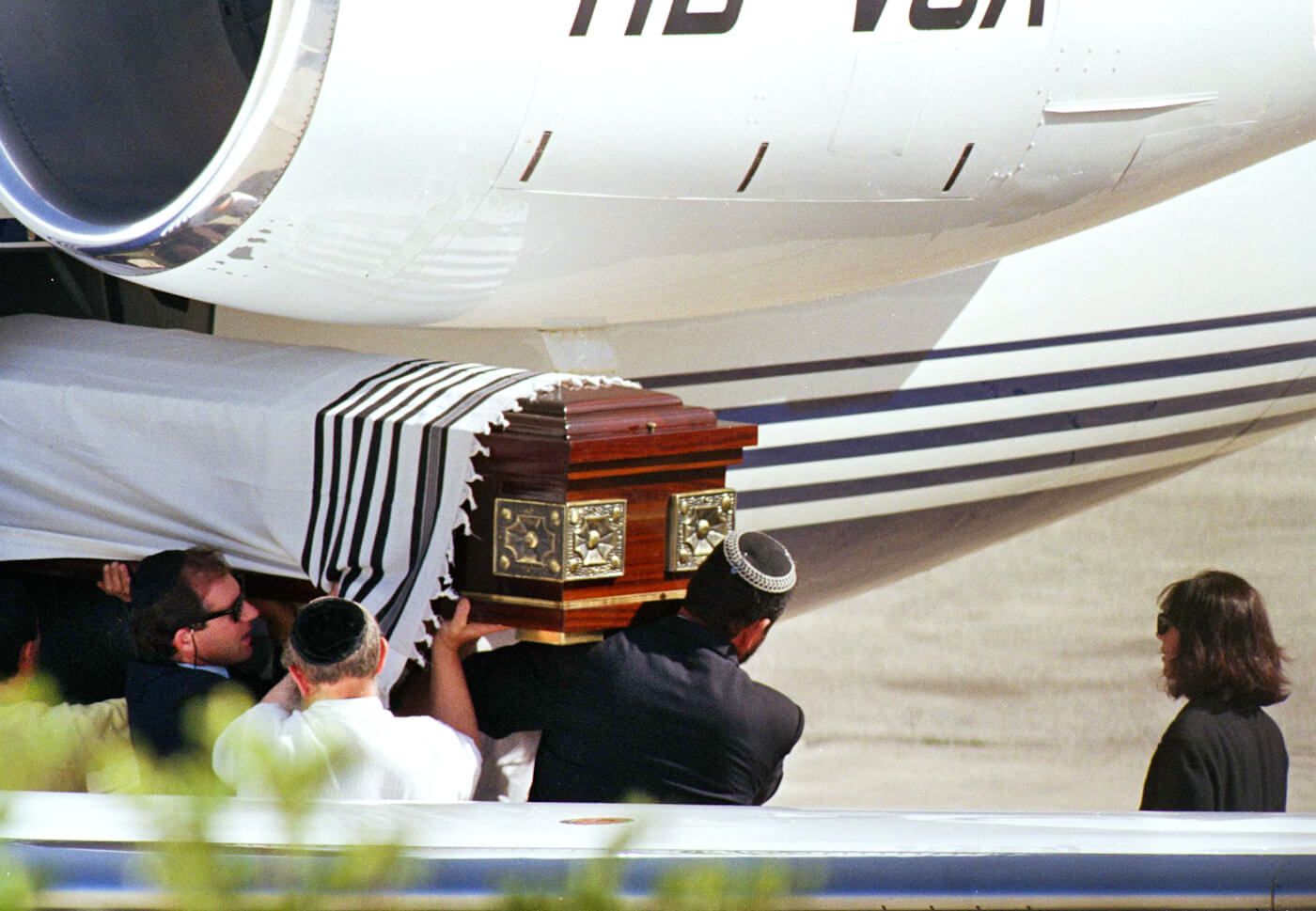
Ghislaine Maxwell, far right, Robert Maxwell’s daughter, looks on his casket is unloaded from a plane
in Jerusalem, Nov. 8, 1991. Heribert Proepper | AP
Some have taken Maxwell’s funeral held in Israel as the country’s “official” confirmation of Maxwell’s service to the Mossad, as it was likened to a state funeral and attended by no less than six serving and former heads of Israeli intelligence. During his funeral service in Jerusalem, Israeli Prime Minister Yitzhak Shamir eulogized him and stated : “He has done more for Israel than can today be said.” Other eulogies were given by future Prime Ministers Ehud Olmert (then Health Minister) and Shimon Peres, with the latter also praising Maxwell’s “services” on behalf of Israel.
Swimming in the same swamp
As he built his business empire — and even became a member of Parliament, Maxwell was also doing work for Israeli
intelligence, as several of the Israeli companies in which he invested became fronts for the Mossad. In addition, as he became a media mogul,
he developed a bitter rivalry with Rupert Murdoch, a close friend of Roy Cohn and an influential figure in American and British media.
Maxwell also partnered with the Bronfman brothers, Edgar and Charles — key figures in the Mega Group. In 1989 Maxwell and
Charles Bronfman partnered up to bid on the Jerusalem Post newspaper and the Post
described the two men as “two of the world’s leading Jewish financiers” and their interest in the venture as “developing
The Jerusalem Post and expanding its influence among world Jewry.” A year prior, Maxwell and Bronfman
had become top shareholders in the Israeli pharmaceutical company Teva.
Maxwell also worked with Charles Bronfman’s brother Edgar in the late 1980s to convince the Soviet Union to allow Soviet
Jews to immigrate to Israel. Edgar’s efforts in this regard have received more attention,
as it was a defining moment of his decades-long presidency of the World Jewish
Congress, of which Ronald Lauder is currently president. Yet, Maxwell had also
made considerable use of his contacts in the Soviet government in this effort.
Maxwell also moved in the circles of the network previously described in Parts I and II in this series. A key example of
this is the May 1989 party, Maxwell hosted on his yacht, the Lady Ghislaine — named for his youngest
daughter and Epstein’s future “girlfriend.” Attendees of the party included Roy
Cohn’s protege Donald Trump and his long-time law partner Tom Bolan. A close
friend of Nancy Reagan was also present, journalist Mike Wallace, as was
literary agent Mort Janklow, who represented Ronald Reagan and two of Cohn’s
closest friends: journalists William Safire and Barbara Walters.
The CEO of what would soon become Time Warner, Steve Ross, was also invited to the exclusive event. Ross’ presence is
notable, as he had built his business empire largely through his association
with New York crime lords Manny Kimmel and Abner “Longy” Zwillman. Zwillman was
a close friend of Meyer Lansky, Michael Steinhardt’s father, and Sam Bronfman,
father of Edgar and Charles Bronfman.
Another attendee of the Maxwell yacht party was former Secretary of the Navy and former Henry Kissinger staffer Jon Lehman,
who would go on to associate with the controversial neoconservative think tank,
Project for a New American Century. Prior to being secretary of the Navy, Lehman
had been president of the Abington Corporation, which hired arch-neocon Richard
Perle to manage the portfolio of Israeli arms dealers Shlomo Zabludowicz and his son Chaim, who paid Ablington
$10,000 month. A scandal arose when those payments continued
after both Lehman and Perle joined the Reagan Department of Defense and while
Perle was working to persuade the Pentagon to buy arms from companies linked to
Zabludowicz. Perle had been part of the Reagan transition team along with Roy
Cohn’s long-time friend and law partner Tom Bolan (another Maxwell yacht
guest).
In addition to Lehman, another former Kissinger staffer, Thomas Pickering was present at Maxwell’s yacht part.
Pickering played a minor role in the Iran-Contra affair and, at the time of the
Maxwell yacht party, he was U.S. ambassador to Israel. Senator John Tower
(R-TX), who allegedly conspired with Maxwell in the Mossad-bugged Promis
software at the Los Alamos laboratories, was also present. Tower died just
months before Maxwell in a suspicious plane crash.
Ghislaine Maxwell was also at this rather notable event. After her father’s mysterious death and alleged murder on the
same yacht that bears her name in 1991, she quickly packed her bags and moved to
New York City. There, she soon made the acquaintance of Jeffrey Epstein and, a
few years later, developed close ties to the Clinton family, which will be
discussed in the next installment of this series.
Jeffrey Epstein and the new “Promis”
After it was revealed that Epstein had evaded stricter sentencing in 2008 due to his links to “intelligence,” it was the Mossad ties of Ghislaine Maxwell’s father that have led many to speculate that Epstein’s sexual blackmail operation was sharing incriminating information with the Mossad. Former CBS executive producer and current journalist for the media outlet Narativ, Zev Shalev, has since claimed that he independently confirmed that Epstein was tied directly to the Mossad.
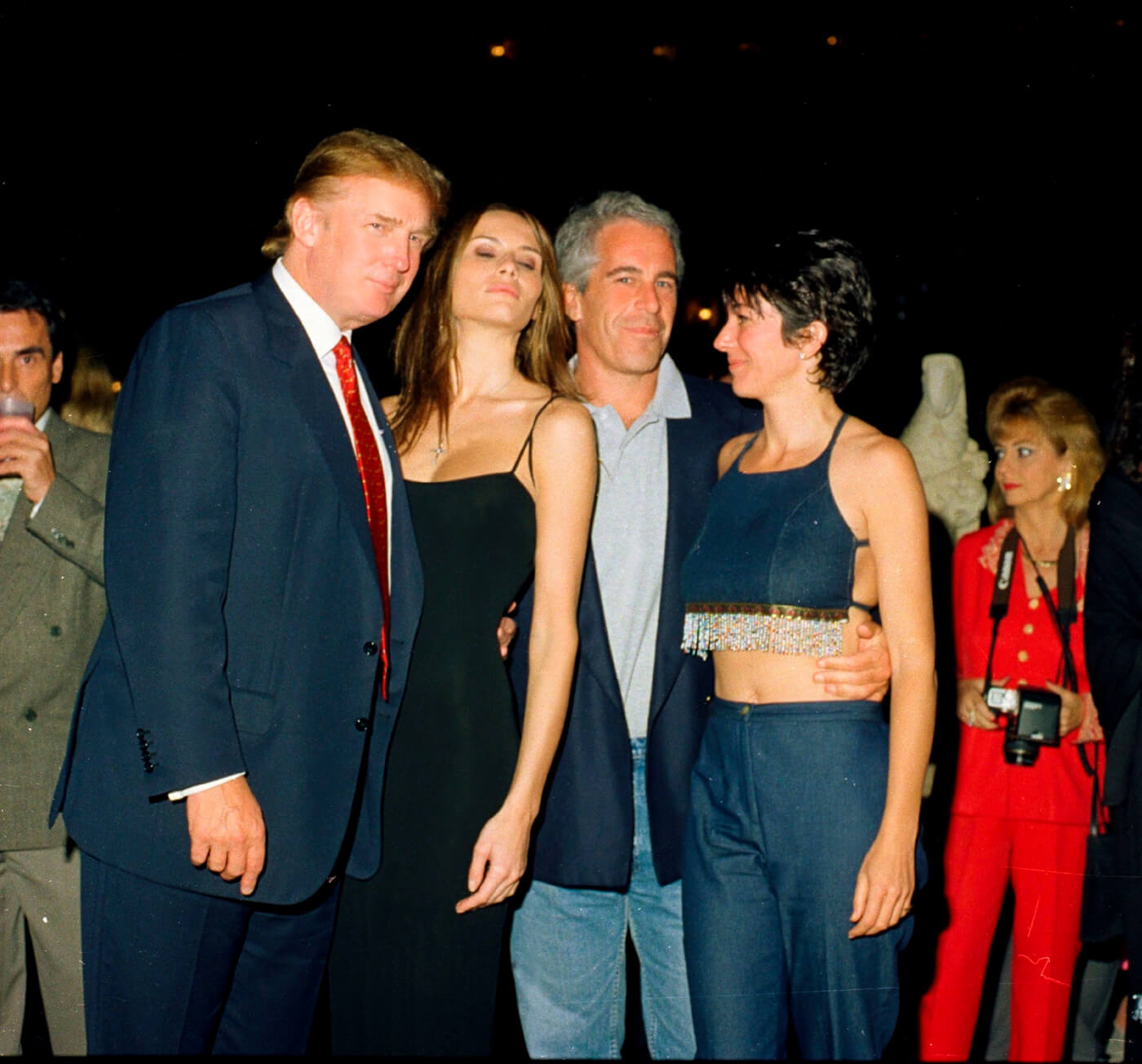
Donald and Melania
Trump with Jeffrey Epstein and Ghislaine Maxwell at the Mar-a-Lago club, Palm
Beach, Florida in 2000. Photo | Davidoff Studios
Epstein was a long-time friend of former Israeli Prime Minister Ehud Barak, who has long-standing and deep ties to
Israel’s intelligence community. Their decades-long friendship has been the source of recent political attacks targeting Barak,
who is running in the Israeli elections against current Prime Minister Netanyahu later this
year.
Barak is also close to Epstein’s chief patron and Mega Group member Leslie Wexner, whose Wexner Foundation
gave Barak $2 million in 2004 for a still unspecified research program. According to Barak, he was
first introduced to Epstein by former Israeli Prime Minister Shimon Peres, who
eulogized Robert Maxwell at his funeral and had decades-long ties with the
Bronfman family going back to the early 1950s. Peres was also a frequent participant in programs
funded by Leslie Wexner in Israel and worked closely with the Mossad for decades.
In 2015, a few years after Epstein’s release from prison following his conviction for soliciting sex from a minor in 2008,
Barak formed a company with Epstein with the chief purpose of investing in an Israeli start-up then known as Reporty. That company, now called Carbyne, sells
its signature software to 911 call centers and emergency service providers and
is also available to consumers as an app that provides emergency services with
access to a caller’s camera and location and also runs any caller’s identity
through any linked government database. It has specifically been marketed by the
company itself and the Israeli press as a solution to mass shootings
in the United States and is already being used by at least two U.S.
counties.
Israeli media reported that Epstein and Barak were among the company’s largest investors. Barak poured millions into the
company and it was recently revealed by Haaretz that a significant amount of Barak’s total
investments in Carbyne was funded by Epstein, making him a “de facto partner” in the company. Barak is now Carbyne’s chairman.
The company’s executive team are all former members of different branches of Israeli intelligence, including the elite
military intelligence unit, Unit 8200, that is often likened to Israel’s equivalent of the U.S. National Security Agency (NSA). Carbyne’s current CEO,
Amir Elichai, served in Unit 8200 and tapped former Unit 8200 commander Pinchas Buchris to serve as the company’s
director and on its board. In addition to Elichai, another Carbyne co-founder, Lital Leshem, also served in Unit 8200 and later worked for
Israeli private spy company Black Cube. Leshem now works for a subsidiary of Erik Prince’s company Frontier Services Group, according to the independent
media outlet Narativ.
The company also includes several tie-ins to the Trump administration, including Palantir founder and Trump ally Peter Thiel
— an investor in Carbyne. In addition, Carbyne’s board of advisers includes former Palantir employee Trae Stephens, who was a member of the Trump
transition team, as well as former Secretary of Homeland Security Michael Chertoff. Trump donor and New York real-estate
developer Eliot Tawill is also on Carbyne’s board, alongside Ehud Barak and Pinchas Buchris.
Narativ, which wrote the first expose on Carbyne after Epstein’s arrest, noted that the
Chinese government uses a smartphone app very similar to Carbyne as part of its
mass surveillance apparatus, even though the original purpose of the app was for
improved emergency reporting. According to Narativ, the Chinese Carbyne-equivalent “monitors every
aspect of a user’s life, including personal conversations, power usage, and tracks a user’s movement.”
Given the history of Robert Maxwell — the father of Epstein’s long-time “girlfriend” and young-girl-procuring madam,
Ghislaine Maxwell — in promoting the sale of Carbyne’s modified Promis software, which was also marketed as a tool to improve government efficacy but was
actually a tool of mass surveillance for the benefit of Israeli intelligence, the overlap between Carbyne and Promis is troubling and warrants further
investigation.
It is also worth noting that Unit 8200-connected tech start-ups are being widely integrated into U.S. companies
and have developed close ties to the U.S. military-industrial complex, with Carbyne being just one example of that trend.
As MintPresspreviously reported, Unit 8200-linked outfits like Team8 have recently hired former National Security
Agency (NSA) Director Mike Rogers as a senior advisor and gained prominent Silicon Valley figures, including former Google CEO Eric Schmidt, as key
investors. Many American technology companies, from Intel to Google to Microsoft, have merged with
several Unit 8200-connected start-ups in recent years and have been moving many
key jobs and operations to Israel with backing from key Republican donors like Paul Singer. Many of those same companies,
particularly Google and Microsoft, are also major U.S. government contractors.
Who was Epstein really working for?
Even though Jeffrey Epstein appears to have had ties to the Mossad, this series has revealed that the networks to which
Epstein was connected were not Mossad-exclusive, as many of the individuals close to Epstein — Lesie Wexner, for instance — were part of a mob-connected
class of oligarchs with deep ties to both the U.S. and Israel. As was discussed in Part I of this series, the sharing of “intelligence” (i.e., blackmail)
between intelligence agencies and the same organized crime network connected to the Mega Group goes back decades. With Leslie Wexner of the Mega Group as
Epstein’s chief patron, as opposed to a financier with direct ties to the Mossad, a similar relationship is more than likely in the case of the sexual
blackmail operation that Epstein ran.
Given that intelligence agencies in both the U.S. and elsewhere often conduct covert operations for the benefit of oligarchs
and large corporations as opposed to “national security interest,” Epstein’s ties to the Mega Group suggest that this group holds a unique status and
influence in both the governments of the U.S. and of Israel, as well as in other countries (e.g., Russia) that were not explored in this report. This is by
virtue of their role as key political donors in both countries, as well as the fact that several of them own powerful companies or financial institutions in
both countries. Indeed, many members of the Mega Group have deep ties to Israel’s political class, including to Netanyahu and Ehud Barak as well as to
now-deceased figures like Shimon Peres, and to members of the American political class.
Ultimately, the picture painted by the evidence is not a direct tie to a single intelligence agency but a web linking
key members of the Mega Group, politicians, and officials in both the U.S. and
Israel, and an organized-crime network with deep business and intelligence ties in both nations.
Though this series has so far focused on the ties of this network to main Republican Party affiliates, the next and final
installment will reveal the ties developed between this web and the Clintons. As will be revealed, despite the Clintons’ willingness to embrace corrupt dealings
during the span of their political careers, their mostly friendly relationship with this network still saw them use the power of sexual blackmail to obtain
certain policy decisions that were favorable to their personal and financial interests but not to the Clintons’ political reputation or agendas.
Editor’s note | The original version of this article incorrectly stated that Rafi Eitan was interested in repurposing
the American-made Promise software to restore his standing in Israel’s intelligence community caused by the fall-out from the Pollard Affair. The
Pollard Affair occurred three years after Eitan had succeeded in repurposing the software and MintPress has removed that incorrect information from the
article and regrets the error.
This article also originally neglected to mention that Eitan, at the time of his collaboration with Earl Brian to
repurpose the Promis software, was the director of the now-defunct Israeli military intelligence agency Lekem at the time of those events and that
information has been added to the story.
Seymour Hersh’s book The Samson Option: Israel’s Nuclear Arsenal and American Foreign Policy does not call Robert Maxwell an “agent” of the
Mossad, as was stated originally in this report, but does allege clear links and cooperation between Maxwell and the Mossad. This report was updated to reflect
this more accurate description.
Feature photo | Graphic by Claudio Cabrera
Whitney Webb is a MintPress News journalist based in Chile. She has contributed to several independent media outlets including Global Research, EcoWatch, the Ron Paul Institute and 21st Century Wire, among others. She has made several radio and television appearances and is the 2019 winner of the Serena Shim Award for Uncompromised Integrity in Journalism.
